When an Object Becomes a Teacher

How Cultural Artifacts Shape Values, Worldview, and Human Relationships
A cultural artifact is often thought of as an object: a tool, a vessel, a weapon, a house, a machine, a piece of clothing, or a work of art. But in human life, some objects become much more than objects. They become teachers. They shape how people move, how they work, how they organize their communities, how they measure success, and how they understand their place in the world.
Three examples show this clearly: the horse among the North American Plains Native nations, the automobile in American culture, and the traditional canoe in Hawaiian culture. Each one changed more than transportation. Each one influenced the way people understood freedom, responsibility, status, community, and the natural world.
The Horse and the Plains Nations
Before the horse became widespread among the Plains Native nations, people moved, hunted, traded, and fought within the limits of walking and using dogs as pack animals. The Plains were vast, and the buffalo herds moved across great distances. Life was already complex, spiritual, and deeply tied to the land, but movement was limited by human strength and endurance.
The arrival of the horse changed that relationship dramatically.
The horse expanded distance. A hunting party could travel farther. A family could move camp more quickly. Goods could be carried more easily. Hunters could follow buffalo with greater success. Warriors could travel farther, strike faster, and defend more effectively. Trade, diplomacy, raiding, hunting, and prestige were all affected.
But the horse did not simply make life faster. It changed the meaning of skill and status. A person who could ride well, control a horse in dangerous conditions, hunt effectively from horseback, or care for horses properly gained a new kind of standing. Wealth could now be measured in horses. A family’s security, mobility, and prestige could be strengthened by the number and quality of horses it possessed.
The horse was not invented by the Plains nations, but once adopted, it was absorbed into existing cultures and reshaped them from within. It did not erase older values. It gave them a new form. Courage, generosity, hunting skill, family responsibility, warfare, wealth, and spiritual relationship were all reorganized around this powerful living artifact.
The Automobile and American Culture
The automobile had a similar effect in modern America, though in a very different way.
At first, the automobile was a machine of convenience. It allowed people to travel without depending on horses, railroads, streetcars, or walking. Over time, however, the car became far more than transportation. It became one of the central symbols of American identity.
The automobile reshaped the American idea of freedom. To own a car meant that a person could leave when they wanted, go where they wanted, and live farther from where they worked. The car strengthened the idea that independence meant private mobility. Freedom became something personal, mechanical, and individual.
The car also changed the physical structure of American life. Cities spread outward. Suburbs grew. Shopping centers, drive-in restaurants, motels, gas stations, garages, parking lots, freeways, and commuter patterns all developed around the assumption that most people would drive. The built environment began to teach people that normal life should be organized around the automobile.
This changed human interaction. In older walking towns or streetcar neighborhoods, people encountered one another more often in shared public spaces. In car-centered landscapes, people moved inside private metal shells from home to work, store, school, and back again. The automobile gave people mobility, but it also changed the nature of community. It made privacy easier. It made distance normal. It made individual independence feel natural.
Yet this independence carried a contradiction. The automobile became a symbol of freedom, but it also created dependence. Once a society is built around cars, not having a car can mean being cut off from work, food, school, medical care, and social life. The artifact that promised freedom also created a world where participation often required ownership.
The automobile shaped American values by making speed, convenience, privacy, personal choice, and individual mobility feel normal. It changed not only where Americans went, but how Americans imagined a successful life.
The Traditional Hawaiian Canoe
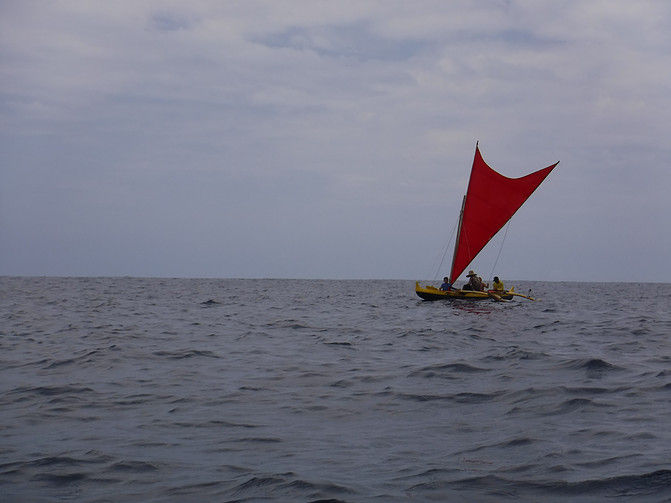
The traditional Hawaiian canoe, ka waʻa, offers a different kind of example. Like the horse and the automobile, it changed movement. But its deeper power is that it connected movement to responsibility.
The Hawaiian canoe was not simply a boat. It was a relationship between forest, ocean, family, skill, spirituality, and survival. To understand the canoe only as transportation is to miss its deeper meaning.
The canoe began in the forest. A tree was not just raw material. It was a living part of the land. The selection of a canoe tree required knowledge of species, age, shape, grain, strength, and location. It also required respect. The forest was not a lumberyard. It was a living source of life.
Koa was the principal wood used for many Hawaiian canoe hulls, but other woods were also used depending on purpose and availability. Canoe building required knowledge of forest zones, rainfall, tree growth, weight, strength, buoyancy, and the relationship between upland resources and ocean life.
This shows the depth of the canoe as a cultural artifact. The canoe taught Hawaiians to think from mountain to sea. A canoe used on the ocean began its life in the upland forest. The fisherman on the water depended on the health of the watershed. The community that ate fish depended on the canoe builder, the rope maker, the forest, the crew, and the ocean. The canoe made visible the interdependence of the ahupuaʻa.
The canoe also shaped personal behavior. A person working on or near a canoe had to learn care, patience, humility, and discipline. Lashing had to be done correctly. Balance had to be understood. Weight had to be distributed properly. The relationship between hull, ʻiako, and ama required constant awareness. The canoe punished carelessness. A mistake could put lives at risk.
This is one of the canoe’s most important lessons: it does not allow the illusion of complete independence. A person in a canoe survives through cooperation. The paddlers must move together. The steersman must read waves, wind, current, and crew. The builder must understand the ocean before the canoe ever touches water. The crew must trust the canoe, and the canoe must be cared for by the crew.
The canoe teaches a worldview very different from the automobile. The automobile often places one person in control of a private machine. The canoe places a person inside a living system of balance. It teaches that freedom does not come from separation. Freedom comes from relationship properly maintained.
In Hawaiian culture, this matters deeply. The canoe is a vessel of values. It carries ideas about respect for kūpuna, care for natural resources, attention to signs in nature, responsibility to community, and the need for pono — a proper and balanced relationship among people, materials, land, ocean, and spirit.
The shape of the traditional canoe also reflects worldview. Its rounded hull, raised ends, ʻiako, ama, lashings, and sail were not random design choices. They came from generations of observation and testing in Hawaiian waters. The canoe was shaped by the sea, and the sea shaped the people who built and used it.
How Artifacts Shape Worldview
These three examples show a common pattern.
First, a powerful artifact changes movement. The horse expanded movement across the Plains. The automobile expanded private movement across modern America. The canoe connected Hawaiian people to fishing grounds, coastlines, channels, forests, and communities.
Second, the artifact changes status. Among horse cultures, riding skill and horse ownership became marks of prestige. In America, the car became a sign of freedom, wealth, adulthood, taste, and identity. In Hawaiʻi, canoe knowledge gave standing to builders, sailors, fishermen, and those who could care for the vessel properly.
Third, the artifact changes human relationships. The horse created new bonds between rider and animal. The automobile changed the relationship between individual and community. The canoe strengthened the relationship between crew, builder, forest, ocean, ancestors, and future generations.
Most importantly, the artifact changes worldview. The rider sees land differently from the walker. The driver sees distance differently from the pedestrian. The canoe person sees forest, wind, wave, current, crew, and community as parts of one system.
This is why cultural artifacts matter. They are not dead things. They are forms of knowledge. They carry memory. They organize behavior. They train the body and the mind.
The Danger of Losing Meaning
A cultural artifact can survive physically while losing its cultural meaning. A canoe can still float but no longer teach the values that created it. A car can still move while hiding the social costs of the world built around it. A horse can still be admired while the people and cultures transformed by the horse are misunderstood.
This is especially important for the Hawaiian canoe today. Modern materials and modern uses are not automatically wrong. Cultures have always adapted. But adaptation becomes dangerous when it cuts the artifact away from the values that gave it life.
If the canoe is understood only as a racing craft, then speed becomes the highest value. If it is understood only as a tourist image, then appearance replaces knowledge. If it is understood only as a symbol of voyaging, then the everyday canoe traditions of fishing, nearshore travel, building, repair, and community practice can be pushed aside.
The traditional Hawaiian canoe carries a broader teaching. It is about design, not decoration. It is about practice, not performance alone. It is about worldview, not nostalgia. It reminds us that technology should not merely help people dominate nature. It should teach people how to live properly within nature.
Conclusion
The horse, the automobile, and the Hawaiian canoe show that cultural artifacts can shape human values in dramatic ways. They change how people move, how they work, how they relate to one another, and how they imagine freedom, responsibility, wealth, and identity.
The deepest lesson is this: human beings create tools, but tools also recreate human beings.
When a cultural artifact becomes central to a people, it becomes a teacher. It teaches what is important. It teaches what skills matter. It teaches what kind of person is admired. It teaches how people should relate to land, water, animals, machines, ancestors, and one another.
To preserve the Hawaiian canoe is not simply to preserve an old form of transportation. It is to preserve a way of understanding the world — a way in which the forest, the ocean, the canoe, the crew, the ancestors, and the community remain tied together in one living system.
The story


Comments